
GC4I team, structural engineering firm in Montreal
Pyrite doesn’t attack the concrete in your house directly. It makes the crushed stone under the slab swell, and that swelling is what lifts the garage or basement floor. A lab analysis confirms the problem. The structural engineer then steps in to measure the damage and design the repairs.
The problem is well documented in several parts of Greater Montreal, particularly the east end of the island and the Montérégie. Living in one of these areas proves nothing about a specific house. The reverse is also true: an address outside these areas guarantees nothing. It all depends on the stone used when the house was built.
This guide explains what happens under the slab, how pyrite is confirmed and when an engineer becomes useful.
If a slab or foundation is moving and you want it assessed, see our Foundation Cracks and Inspection page.
What happens under the slab
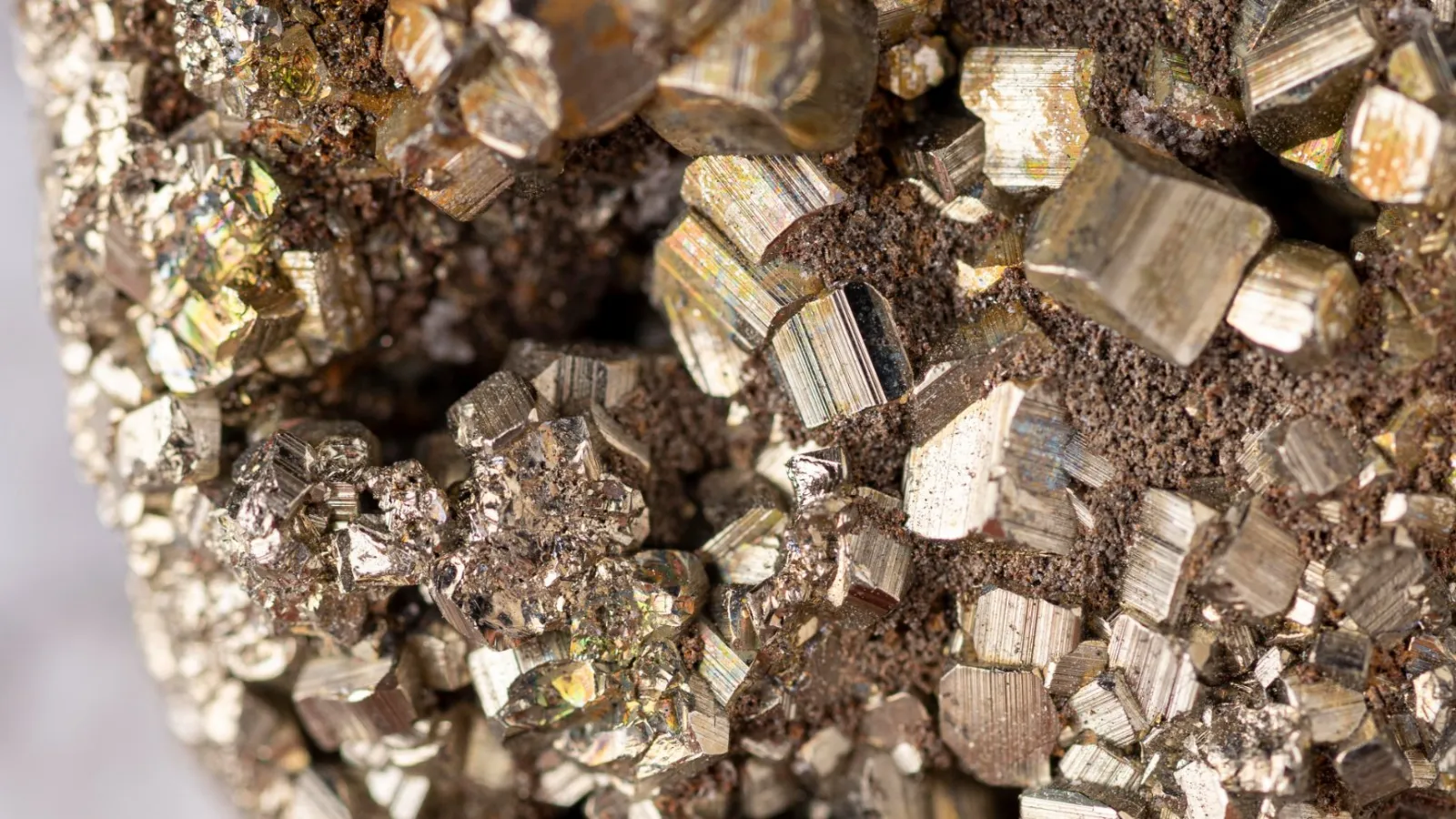
Pyrite is an iron sulphide found in some types of stone. In contact with moisture and oxygen, it oxidizes and produces sulphuric acid. The acid reacts with minerals in the stone and forms crystals, including gypsum, that take up more space than the original rock. The fill swells, and the slab on top has no choice but to rise.
The movement is slow. According to the Association des consommateurs pour la qualité dans la construction (ACQC), heave progresses by 1 to 5 mm a year on average. That is why the first signs often appear several years after construction, and why a house that seemed sound at purchase can change over time.
Pyrite or pyrrhotite: two different problems
Pyrite affects the fill under the slab. Pyrrhotite, another iron sulphide, is found in the aggregate of the concrete itself and attacks foundation walls from within. It has mostly been documented in the Mauricie region. Diagnosis, repairs and recourse are not the same, so you need to know which one you are dealing with.
Signs to watch for
The most common signs:
- A heaved or bulging slabIn the garage or basement. According to the ACQC, the garage is often the first place where heave shows.
- Star-shaped or cross-shaped cracksIn the slab, sometimes with a fine white powder along the cracks.
- Floors, doors and partitionsFloors that go out of level, doors that stick, basement partitions that crack or press against the ceiling.
- Cracks in the foundationEspecially in the walls around the garage, where the slab pushes against the foundation.
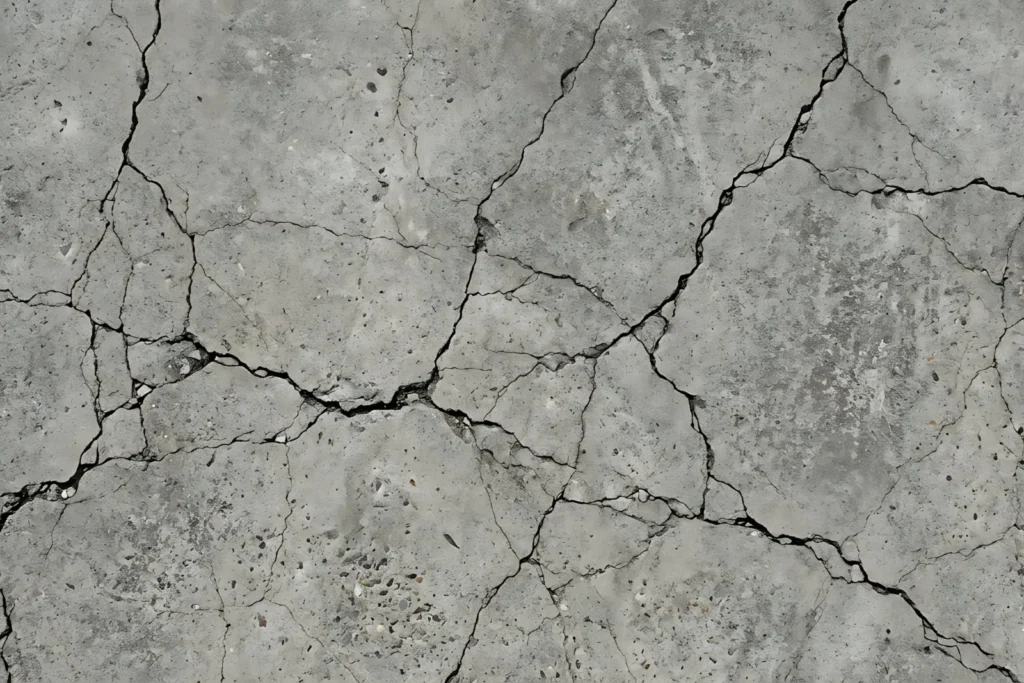
None of these signs proves the presence of pyrite on its own. Settlement, poor drainage or frost under a garage slab can produce similar symptoms.
If you notice any of these signs, start documenting: dated photos, the length and width of each crack, and a pencil mark at each end. These records are a big help during the diagnosis, because they show whether the movement is continuing.
Confirming it: the lab test
Pyrite can’t be confirmed by eye. A building inspector can point out clues, but doesn’t take samples or run analyses. The slab has to be drilled and the fill sampled, then sent to a specialized laboratory.
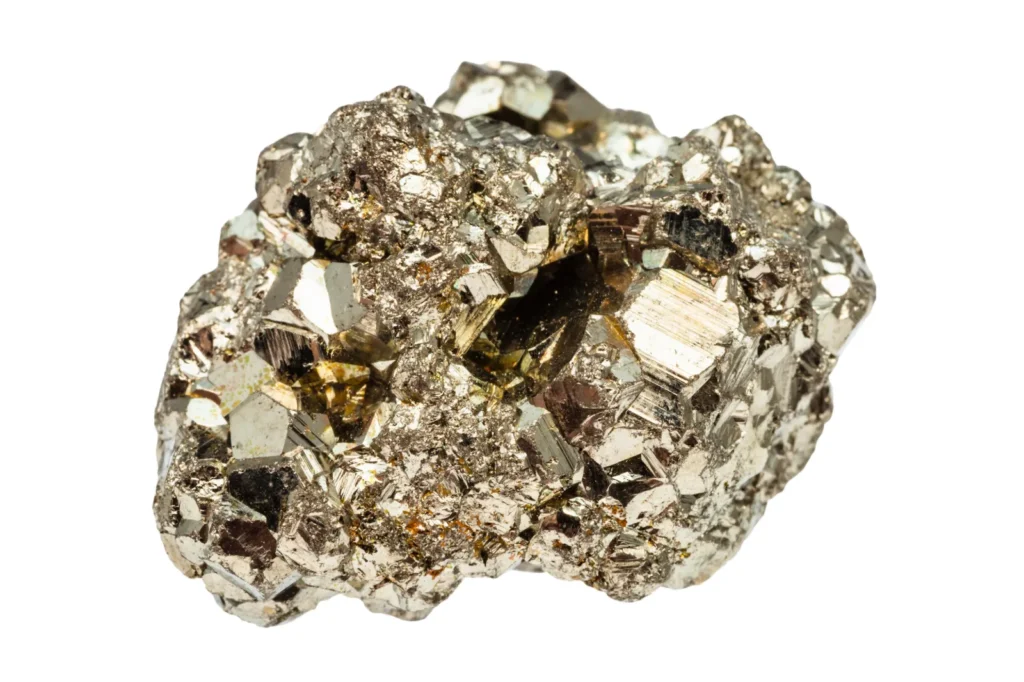
The laboratory performs a petrographic analysis of the stone and calculates the IPPG, the petrographic swelling potential index. The index runs from 0 to 100: the higher it is, the more likely the fill is to swell. The ACQC recommends requiring that the assessment follow the CTQ-M200 procedure, which governs professionals’ work on existing buildings.
A good report states where the sample was taken, describes the fill, gives the index obtained and explains the limits of the analysis. One sample tells you about one spot. Under a large slab, or a slab that has been partly redone, several samples are sometimes needed.
What the index doesn’t tell you
The IPPG measures swelling potential, not the condition of your building. High-potential fill under a slab that is still intact and average fill under a slab that has already heaved don’t call for the same decision. You decide what to do, and when, by combining the analysis with what is observed on site.
The structural engineer’s role
The laboratory answers one question: is the stone reactive? The engineer answers the next ones. What has the swelling already damaged? Is the structure affected? How do you fix it without creating new problems?
What the engineer does, in order
- Document: levels of the slab and floors, crack mapping, condition of the foundation walls and partitions.
- Sort out the causes: what comes from swelling, from settlement or from a drainage problem, in light of the lab report.
- Assess the load-bearing elements: foundation walls pushed outward, columns and partitions transferring the heave to the framing.
- Prepare the repair drawings: demolition sequence, temporary shoring where needed, new slab, foundation repairs.
- Follow the work on site: visits at the stages where a mistake is expensive to fix, such as the bottom of the excavation and the fill delivered before the pour.
One detail is often overlooked: the columns carrying the main beam sit on footings below the slab. When the fill around them is excavated, the beam sometimes has to be shored, and care must be taken not to weaken those supports. That is the kind of issue an engineer’s drawings settle before the contractor arrives.
The fix: replacing the fill
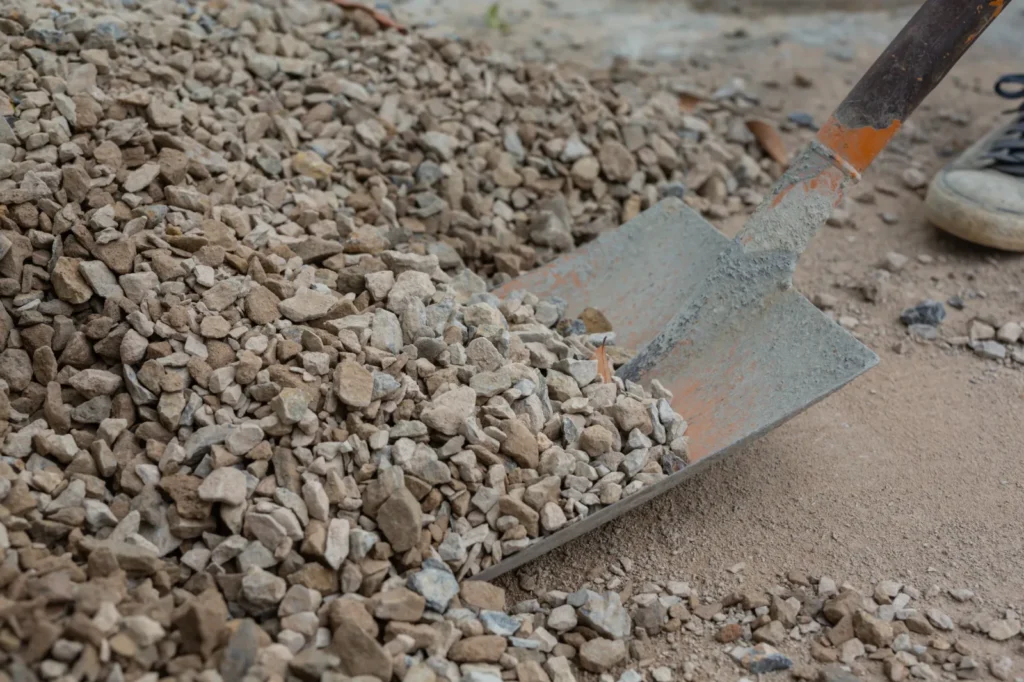
There is no recognized method for stopping pyrite from oxidizing in place. When the fill is reactive and the slab is moving, the lasting solution is to break up the slab, remove the contaminated fill and pour a new slab on certified stone.
Ask for DB-certified fill (DB stands for dalle de béton, concrete slab). The certification comes from the CTQ-M100 standard, applied on a voluntary basis since 1999. The ACQC recommends keeping the delivery slip that confirms it: years later, it is your proof that the right stone was used.
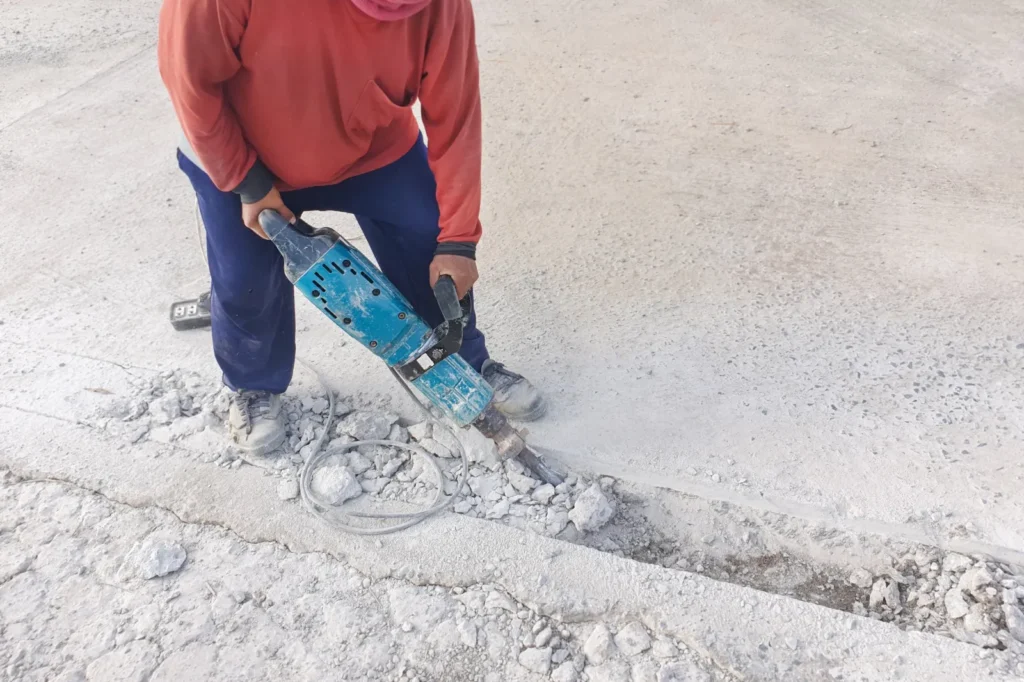
Patching the cracks without replacing the fill doesn’t address the cause. It can be a reasonable temporary measure if the index is low and the slab hasn’t moved, as long as you keep measuring. If the movement starts again, so does the question.
The scale of the work depends a lot on what sits on the slab. An empty garage is much simpler to redo than a finished basement, where partitions, finishes and sometimes the plumbing under the slab have to come out.
Buying or selling a house with suspected pyrite
Testing isn’t mandatory in a sale, but what the seller knows about pyrite must appear in the seller’s declarations. If a test has already been done, read the full report: date, sampling location, method and the index obtained. A test done in the garage says nothing about the basement.
For a buyer, a high index isn’t necessarily a reason to walk away. It is a reason to size up the work properly before signing. A building assessment will tell you whether you are buying fill that needs replacing, or foundations that need repairs as well.
If pyrite is discovered after the purchase, read our article on the expert engineer’s role in a latent defect case. The deadlines for notifying the seller matter.
Frequently asked questions
Can a 40- or 50-year-old house have pyrite?
Yes. The age of the house offers no protection, since everything depends on the stone used under the slab. A slab that has never moved after several decades is a fairly reassuring sign, but only a lab analysis can settle the question.
Who does the pyrite test?
The sample is taken by drilling through the slab, and the petrographic analysis is done by a specialized laboratory. Ask that the assessment follow the CTQ-M200 procedure and that the report state the IPPG.
Can the cracks in the slab simply be repaired?
Not if the fill is reactive and the slab keeps rising: patching hides the symptom without touching the cause. It can serve as a temporary measure when the index is low and the measurements show that nothing is moving.
How much does pyrite removal cost?
The cost depends on the area to redo, access, what is finished on top of the slab and the condition of the foundations. Contractors price the work, ideally from the same drawings. That is what makes their quotes comparable.
Do you need an engineer to redo a slab?
It depends on what is affected. If only the slab is involved, a specialized contractor can often handle it. As soon as foundation walls, columns or load-bearing partitions are affected, or the structure has to be shored during the work, an engineer should assess the situation and prepare the drawings.
A slab that’s rising, or star-shaped cracks?
Have the situation documented before starting any work. Tell us what you are seeing: we will send you a written service proposal to assess the foundation and, if needed, prepare the drawings.
Scope of this guide. This content is general in nature. It doesn’t replace a site visit, a laboratory analysis or an engineer’s opinion on a specific building.
Sources consulted